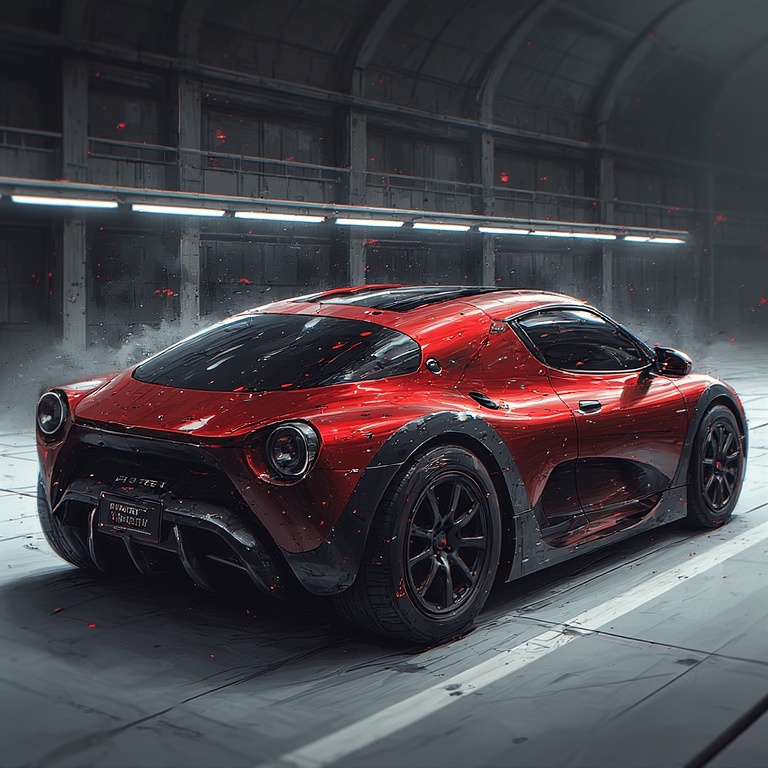
EVs took a wrong turn at some point: They were supposed to be a revolution from above, first introduced in hypercars and the luxury segment. But that’s not really the definition of a revolution, is it? To make an impact for the environment, you need a true car for the masses.
The problem is that most people can’t afford a six-figure car, most people can’t afford the plummeting values within less than two years and most people don’t need the equivalent of 500 horsepower to drive to work and back.
If you look at the low-cost EV segment, things are even worse in terms of quality, longevity, range, and safety. They also handle worse than a shopping cart and are sometimes mistaken for toys by passing children.
Plus, there is no excuse why EVs have to have an annoying interior, we were perfectly happy with our round steering wheels and physical buttons in 2005. So happy in fact that people now share clips online of how great things looked and felt back then. We also don’t want to go through seven sub-menus on a large expensive screen to change the temperature. We were fine with regular controls and would like our mechanical door handles back, please.
Finally, there is absolutely no reason to have EVs look like they overwhelmingly do: Fake air vents, worse plastic than those straws we all miss, 112 conflicting body lines and a confused expression on their face. With most current EVs, your neighbors will try to position their trash bins in a way that they don’t have to see it from their living room.
All of this is confusing to us as petrol heads: The simplicity of an EV drivetrain compared to an ICE drivetrain should ‒ in theory ‒ allow for ease of maintenance, a low center of gravity, endless design possibilities and a safer crash structure among other things. EVs are also silent, smooth, and get up to motorway speeds quickly.
We hoped for endless possibilities and were disappointed. So we decided to do something.
First, we took the best current drivetrain and battery technology. Proven, reliable, mass-produced.
Then, we stuffed it into a small hatchback body designed along the classic lines from the times where you could still actually tell brands apart. You’ll turn around after locking it and walking away, promised.
Then, we made it light. Very light. Remember those little sports cars in the 90s weighing about as much as a well-fed cow? Yes, that light. Less weight means more range and more fun.
Finally, we gave our EV only the basics you really need: A normal steering wheel, a regular instrument cluster that does not blind or overstimulate you, two pedals, actual buttons for the AC and radio to use without taking your eyes off the road, normal mirrors ‒ not cameras that break for no reason, normal door handles, normal and comfy seats. Oh, and the headlights have LED bulbs. You can change them without buying a whole new headlight.
As many components as possible come from regular mass-produced cars. We believe 110 years of development should not go to waste ‒ coincidentally, it also reduces our costs in production and your costs in maintenance.
No LIDAR, no self-driving, no HUD, no active safety, no annoying beeping. We believe that a focused driver is the best safety.
It does not even have a touchscreen. Why? You’re always carrying a display with you. Just connect the app on your phone and set up all the small details of the car whilst you are not driving it. Much safer.
Have a look at the REDMANE EV-0. A normal car. Just electric.
© 2025 Ben Büchlein. All rights reserved. This is a creative copy concept and not based on any real product.
 Steinschmatz
Hinterlasse einen Kommentar